Moonstone: Virtues, History, Properties and Benefits in Lithotherapy
A mysterious stone with pearly reflections, Moonstone fascinates. Associated with femininity , intuition and spirituality, it is renowned for its many virtues in lithotherapy . Discover its fascinating history , its unique properties and how it can bring you balance and well-being.
Mineralogy: Moonstone
Moonstone is a variety of feldspar belonging to the silicate group, more precisely the tectosilicates. Its chemical composition and unique crystal structure are the origin of its distinctive optical effect, adularescence. This section explores in detail the mineralogical properties that characterize this fascinating gemstone.
Mineralogical characteristics:
Chemical Composition: Moonstone is primarily composed of potassium aluminum silicate , with the chemical formula KAlSi₃O₈ . More specifically, it is a variety of orthoclase, a potassium feldspar . It is important to note that the term " Moonstone " is sometimes incorrectly used to refer to other feldspars that exhibit adularescence, such as peristerite (which contains more sodium) or some varieties of labradorite . True Moonstone is indeed a potassium feldspar (orthoclase) with albite inclusions.
Hardness: 6 to 6.5 on the Mohs scale , which makes it relatively fragile. It is sensitive to scratches and shocks.
Density: The density of Moonstone is between 2.56 and 2.63 g/cm³ . This value is a measure of the ratio of mass to volume of the stone and is an important physical characteristic for its identification. It allows it to be differentiated from other gemstones of similar appearance.
Crystal system: Monoclinic. Crystals are usually prismatic or tabular.
Color: The base color is usually colorless or milky white , but it can have shades of cream, yellow, brown, gray, blue, green, peach, pink, and even black. The most sought-after colors are milky white with a bright blue sheen and the rainbow variety.
Adularescence: The most distinctive optical effect. It is an internal shimmer , a kind of floating luster beneath the surface, usually bluish or silvery white . The intensity and color of adularescence vary depending on the viewing angle and the quality of the stone.
Transparency: Translucent to opaque . High quality stones are more translucent.

Formation and deposits
It is found in particular in:
India: One of the world's leading producers, particularly in the southern regions of India (Kerala and Tamil Nadu). Indian stones are often known for their beautiful blue adularescence .
Sri Lanka (formerly Ceylon): Historical source of high quality Moonstones , renowned for their transparency and blueish luster.
Madagascar: Known for its Moonstones with good transparency and bluish to white adularescence.
Burma (Myanmar): Source of gem-quality Moonstones , often associated with sapphire deposits.
Australia: Moonstones are found in Australia, mainly in South Australia and Western Australia.
Other deposits: Brazil, Mexico, Tanzania, United States (mainly in Virginia and New Mexico), Swiss Alps (Mount Adula, hence the name "adularia").
Varieties of Moonstone:
White Moonstone: The most common variety , with a milky white body and a bluish or white adularescence.
Blue Moonstone: Highly sought after for its intense and pronounced blue glow . Rarer and therefore more expensive.
Rainbow Moonstone: Features multi-colored reflections, reminiscent of the colors of a rainbow , in addition to adularescence. This variety often contains inclusions of other minerals.
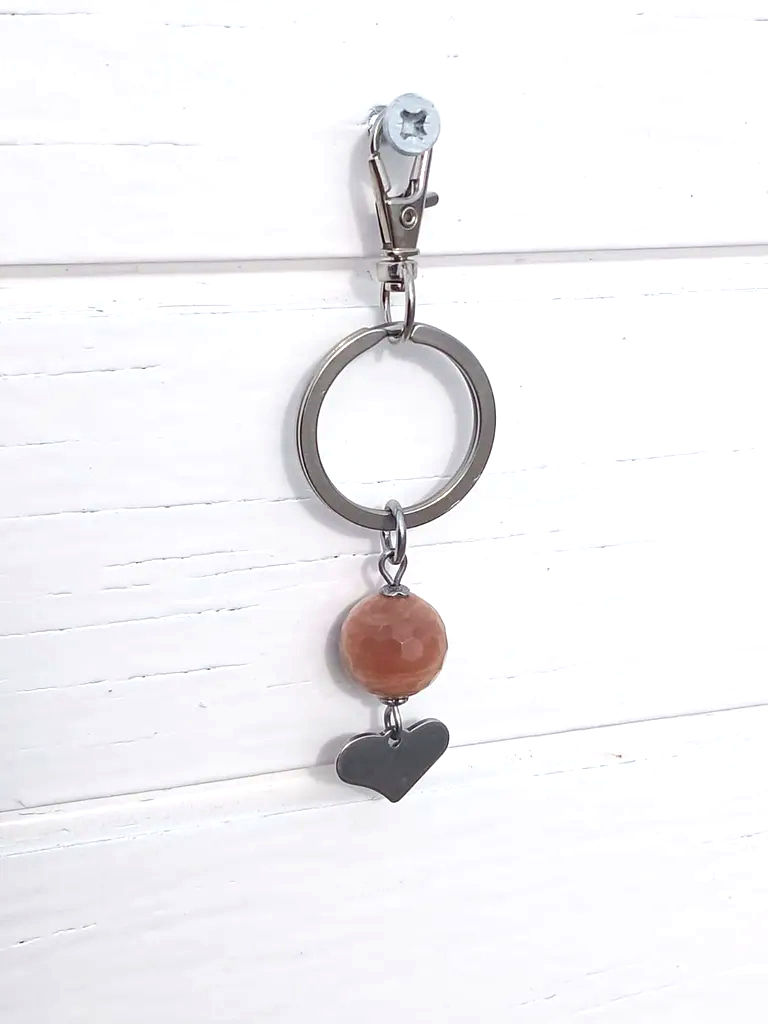
Peach Moonstone: A rarer variety with warm tones ranging from pale orange to peachy pink.
Black Moonstone: Rarer and more mysterious with a dark base and luminous reflections.

History and Mythology of the Moonstone
Moonstone , with its soft and mysterious glow , has long captured the imagination of men and has been imbued with myths and legends across cultures. Its intrinsic connection to the moon, the night star that influences tides and biological cycles, has made it a powerful symbol of femininity , intuition and mystery.
In ancient times , the Romans believed that Moonstone was formed by solidified moonbeams , giving it a magical aura . They associated it with Diana , the goddess of the hunt , the moon , and the wilderness , and the protector of women and childbirth . This connection with the lunar deity reinforced the idea that the stone possessed powers related to fertility and femininity .
In India , Moonstone held a prominent place in Hindu mythology . It was considered a manifestation of the lunar rays , a sacred stone associated with Chandra, the moon god . According to legend, a Moonstone was placed on his forehead since the beginning of time. It symbolized hope, purity, and spirituality . It was also believed to promote love and could reconcile separated lovers. It is said that in India and Europe, two people wearing a Moonstone pendant would fall madly in love.
Greek civilizations also shared a fascination with this gemstone , linking it to Selene, the goddess of the moon . They believed it offered protection to night travelers, especially when the moon shone in the sky. This belief was shared by sailors who believed the Moonstone would protect them on their sea voyages.
In the Middle Ages , Moonstone was believed to have powers of divination . Fortune-tellers used it to predict the future and communicate with the spirit world. It was said that placing it under the tongue on full moon nights allowed one to see the future.
Later, in the early 19th century , mineralogist Jean-Claude Delamétherie officially described and named Moonstone . Its appeal saw a resurgence in popularity during the Art Nouveau period, when it was highly prized for creating delicate and refined jewelry .
Even today , Moonstone continues to fascinate and be associated with the moon and its mysteries . It became the official gemstone of the State of Florida in 1970, in commemoration of man's first steps on the moon.
Moonstone : Benefits and Virtues for the Body and Mind
Associated Chakras:
Sacral Chakra (Swadhisthana): Main associated chakra . Linked to creativity, sexuality, fertility , emotions, joy and pleasure. Moonstone harmonizes and balances this chakra.
Crown Chakra (Sahasrara): Center of spirituality, connection to the divine, wisdom , and higher intuition . Moonstone promotes spiritual openness and access to this awareness.
Third Eye Chakra (Ajna): Associated with intuition , extrasensory perception, and clairvoyance . Moonstone can enhance these abilities.
Heart Chakra (Anahata): Linked to unconditional love , compassion, acceptance, and emotional balance . Moonstone softens emotions and promotes harmonious relationships.
Associated astrological signs:
Cancer: Water sign ruled by the Moon . Shares a strong affinity with Moonstone, strengthening intuition, sensitivity and empathy.
Pisces: Another water sign, intuitive and sensitive . Moonstone brings emotional calm, mental clarity and promotes dreams.
Virgo: Earth sign often perfectionist and prone to anxiety . Moonstone helps to let go, manage stress and regain emotional balance.
Capricorn: Earth sign often reserved and introverted . Moonstone encourages the expression of emotions and the opening of the heart.

Virtues on the emotional and spiritual level
Intuition and Creativity: Develops intuition, imagination and creativity.
Emotional Balance: Soothes emotions, promotes gentleness, compassion, balance and serenity of mind.
Stress and Anxiety Management: Helps overcome stress, anxiety, fears and phobias.
Spiritual Opening: Facilitates spiritual connection and access to inner wisdom.
Sleep: Would improve the quality of sleep and help fight insomnia.
Acceptance and Love: Helps with self-acceptance and promotes unconditional love.
Virtues on the physical plane
Hormonal Balance and Menstrual Cycle: Regulates hormones, alleviates menstrual pain, premenstrual syndrome (PMS), and menopause symptoms.
Fertility and pregnancy: Supports female fertility, accompanies pregnancy and facilitates childbirth.
Lactation: Stimulates the production of breast milk.
Digestive System: Relieves heartburn and other mild digestive upsets.
Lymphatic system: Promotes lymphatic drainage.
Skin, Hair and Eyes: Beneficial for the health of skin, hair and eyes.
Water retention: Would reduce water retention.
Use and Advice
Meditation: Place the stone on the sacral chakra (2nd chakra) or the crown chakra (7th chakra) during meditation.
Elixirs: Prepare moonstone elixirs by infusing the stone in water (indirect method recommended to avoid any risk of toxicity).
In the environment: Place moonstones in the bedroom to promote sleep, or in a creative space to stimulate inspiration.
Purification and Recharging of Moonstone
Purification:
Clear water (running water or distilled water).
Fumigation (white sage, natural incense).
Earth (bury the stone for a few hours).
Recharging:
Moonlight (full moon preferred).
Quartz cluster or amethyst geode.
Note: Lithotherapy is a complementary approach and does not replace medical advice.